

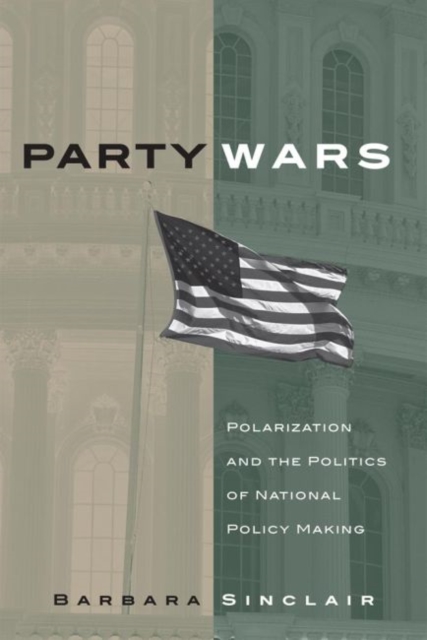
Party Wars: Polarization and the Politics of National Policy Making
ourprice £21.95
| Author | Barbara Sinclair |
|---|---|
| Format | Paperback |
| Publisher | University of Oklahoma Press |
| Publication Date | 2006-05-22 |
| Pages | 448 |
| ISBN-13 | 9780806137797 |
In stock
Description
Party Wars is the first book to describe how the ideological gulf now separating the two major parties developed and how today’s fierce partisan competition affects the political process and national policy.Barbara Sinclair traces the current ideological divide to changes in the Republican party in the 1970s and 1980s, including the rise of neoconservativism and the Religious Right. Because of these historical developments, Democratic and Republican voters today differ substantially in what they consider good public policy, and so do the politicians they elect. Polarization has produced institutional consequences in the House of Representatives and in the Senate – witness the majority party’s threat in 2004-2005 to use the “”nuclear option”” of abolishing the filibuster. The president’s strategies for dealing with Congress have also been affected, raising the price of compromise with the opposing party and allowing a Republican president to govern largely from the ideological right. Other players in the national policy community – interest groups, think tanks, and the media – have also joined one or the other partisan “”team.””Party Wars puts all the parts together to provide the first government-wide survey of the impact of polarization on national politics. Sinclair pinpoints weaknesses in the highly polarized system and offers several remedies.
Additional information
| Weight | 0.516 kg |
|---|---|
| Dimensions | 2.9 × 14 × 20.8 cm |
| Author | Barbara Sinclair |
| Publisher | University of Oklahoma Press |
| Imprint | University of Oklahoma Press |
| Format | Paperback |
| ISBN-13 | 9780806137797 |
| Publication Date | 2006-05-22 |
| Publication Year | 2006 |
| Pages | 448 |
| Country of Publication | GB |
| Language | English |



Reviews
There are no reviews yet.