

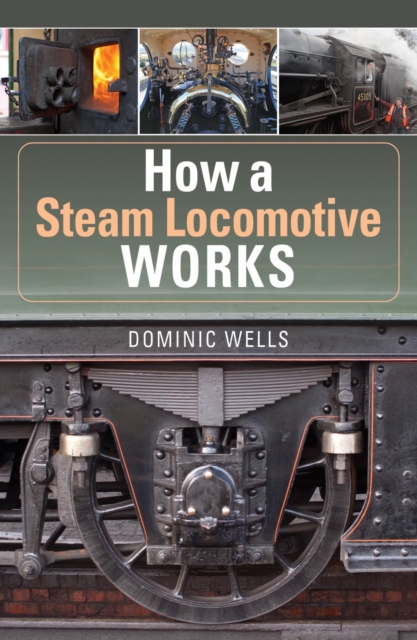
How a Steam Locomotive Works
ourprice £19.95
| Author | Dominic Wells |
|---|---|
| Format | Paperback |
| Publisher | Crecy Publishing |
| Publication Date | 2021-07-15 |
| Pages | 178 |
| ISBN-13 | 9781910809747 |
In stock
Description
Unavailable for some time, this book proved to be an instant success when first published, explaining as it did, in a simple and comprehensible way the complex engineering behind a steam locomotive. The subject is explained through a series of easily understandable diagrams which show the function of the components in step-by-step sequences. The clear diagrams and explanations require no prior technical or engineering knowledge. Photographs, both historic and contemporary, illustrate the text. Starting with a basic introduction to the principles of the steam locomotive boiler, the text provides detailed explanations of both coal and oil firing. Further detailed chapters examine the essential components, including gauge glasses, injectors, ejectors, control valves, mainframes, cylinders, valve gear, lubrication, air and vacuum brakes and cab layouts. Additional chapters cover wheel arrangements, balancing, engine layout and fault finding. This expanded edition is the ideal introduction to the subject both for older steam enthusiasts, as there are few who understand every aspect of the steam locomotive in its entirety, a subject which encompasses many engineering specialisms including structures, dynamics, thermodynamics and fluid flows, and heritage railway volunteers and fans who love this most dramatic and inspiring form of traction but may not be up to speed with how it actually operates.
Additional information
| Weight | 0.442 kg |
|---|---|
| Dimensions | 1.6 × 23.4 × 15.7 cm |
| Author | Dominic Wells |
| Publisher | Crecy Publishing |
| Imprint | Crecy Publishing |
| Format | Paperback |
| ISBN-13 | 9781910809747 |
| Publication Date | 2021-07-15 |
| Publication Year | 2021 |
| Pages | 178 |
| Country of Publication | GB |
| Language | English |



Reviews
There are no reviews yet.